How to Write Effective PPC Ad Copy

Writing the copy for your PPC ads can feel like an insignificant part of your marketing strategy. With in-depth audience, competitor and keyword research all completed, throwing together a couple of lines of copy can feel like an easy last step. After all, isn’t the hard part just getting your ad in front of the right audience?

It’s not that simple. Your PPC ad copy may be short, but it carries a lot of responsibility. It’s what convinces searchers to choose your business or product. Get it wrong and you’ll be wasting time, effort and even valuable ad spend.

In this guide, we’ll walk through what pay-per-click (PPC) ad copy really is, why it matters, and how you can write compelling, high-converting ads that speak directly to your audience. So, read on to find out how to write PPC ad copy that doesn’t just get seen — it gets results too.
Contact Us For PPC Support
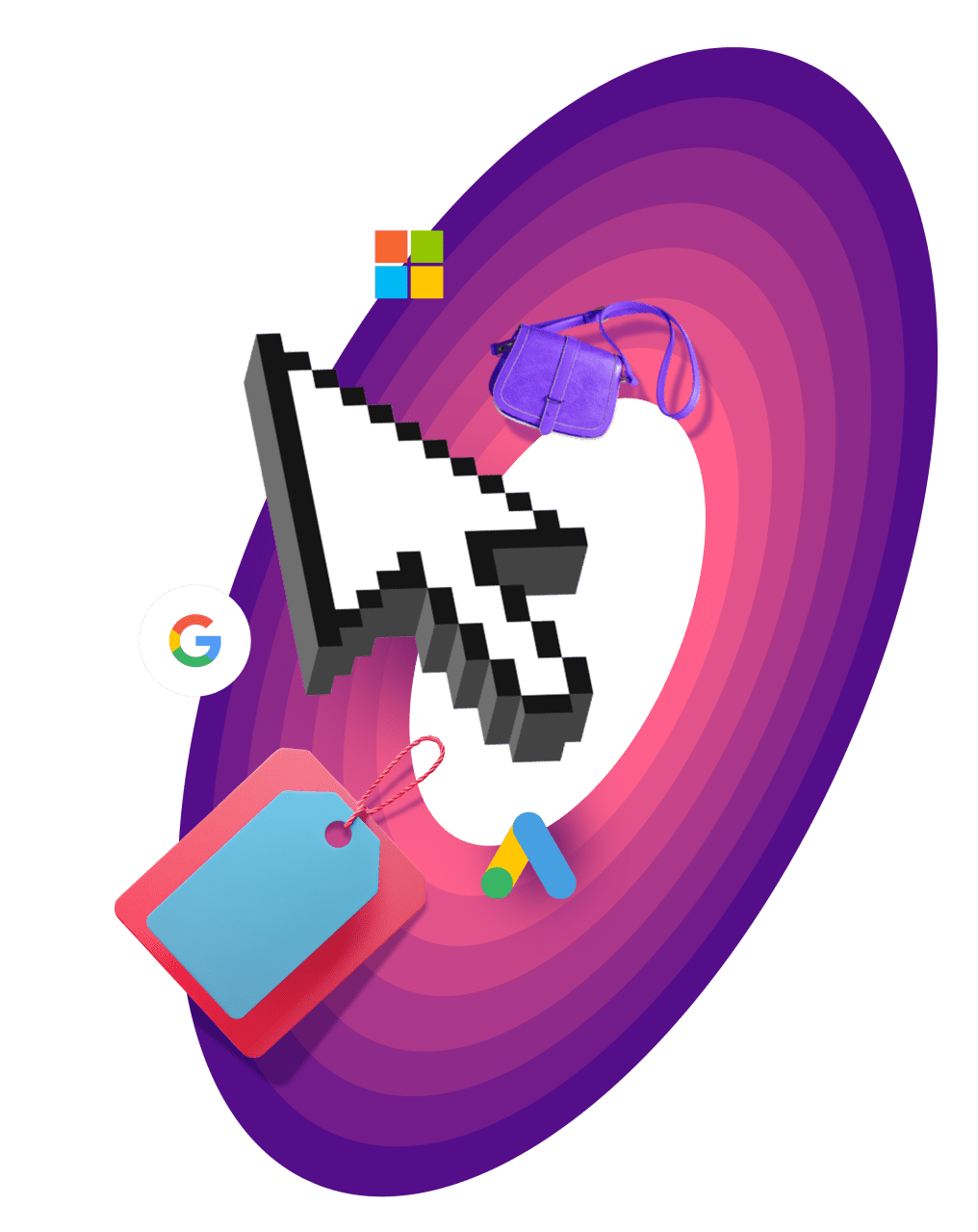
PPC services and icons in a purple and pink portal

What is PPC Ad Copy?

Ad copy is an industry term for the words on PPC ads. It should tell your audience about the product or service being advertised, catch their interest and convince them they need to know more so they click on your link.

The exact components of ad copy differ depending on the platform, but it covers everything from headlines to image text. Basically, all the words that make up the ad copy.

Why is PPC ad copy important?

If you use PPC advertising, then for the majority of your customers your ad copy will be the first impression potential customers get of your business. It will colour their entire opinion of your product or service offering, creating a positive or negative impression from the start.

It is your opportunity to grab attention and encourage searchers to visit your website. It communicates the values your brand holds, the benefits your business can bring, and why your customers should choose you above others.

All of this, in one headline and small paragraph. That’s both impressive and a little bit intimidating – so it’s important you dedicate time to writing it.

Ad Formats

The exact layout of a pay-per-click ad will depend on the platform its featured on, but most will have the following included:

Title/URL

Though this sits outside ad creation, it is important that these are clear. This lets your audience know exactly where they are heading if they click through. If they’re unclear, you’ll likely attract irrelevant traffic and waste your ad spend.

Headline

This is the large text that appears below the URL. For text ads this is the most eye-catching part, and the first ad copy your audience reads – sometimes the only thing they read. This makes it the most important part of the ad.

Unfortunately, this also makes it the hardest to get right. Your headline needs to be compelling and attention grabbing but it also needs to be relevant. It can’t make undeliverable promises either.

Description

This is the body text which appears below your ad headline. It gives you more space to detail your product or offer and to explain the benefits in a brief and persuasive way.

The body text can usually be up to 90 characters.

CTA’s

A call to action (or CTA) is the part of your copy that compels your reader to act in a certain way. It will usually include an instruction on what you want them to do and where or when. ‘Click here’ or ‘browse our range’ and ‘contact us today’ are all examples of CTAs.

Assets (previously ad extensions)

These are additional elements you can include in your ad to make it more appealing. These might include sitelinks, images, promotions, or contact details like your phone number. The formatting of assets helps them stand out, drawing audience attention and making them the perfect place to put important information.


How To Write High Converting PPC Ad Copy

1. Clarify your value proposition and unique selling proposition

The first step of writing converting copy is to know exactly what you’re selling and why people should buy it. However familiar you think you are with the value you offer, a good way to prepare for writing ad copy is to jot down the reasons your target audience should invest in you. You’re going to be convincing people to purchase, you need to know why they should.

Think about the specific problem your product or service is able to solve. Identify the feelings your audience might feel around it, what they want to achieve and how their experience will be improved with the help of your business.

This should be the basis of any persuasive ad copy you write, so the clearer you are on these factors, the easier you will find writing.

2. Find ad group keywords or topics

Finding the relevant keywords, ones that match search intent and deliver an effective cost-per-click is a vital part of any PPC marketing campaign. However, this goes far beyond the realm of compelling ad copy – that’s why we wrote an entire article about PPC keyword research to support you as well.

3. Competitor research

Carry out searches on your competitors using the keywords you’re targeting. Study what they are saying. What benefits are they pushing, what problems are they claiming to solve? How can you improve on their message – either by saying the same thing but more persuasively, or by differentiating yourself with a different benefit?

4. Write your copy

With a strong foundation of research, you’ll naturally write more effective ad copy than before.

Start with a headline that highlights a feature, benefit or offer you think will stand out. 

Add more context or persuasive details in the body description. This can be broader than the headline but should still be relevant.

End with a strong call to action.

How To Write An Effective CTA

Your call-to-action (CTA) is an incredibly important part of all ad copy. If the headline is the attention grabber, then your CTA is what drives your click through rate.

It’s so important, we could spend a whole article on just this part of ad copy alone. But here are some quick tips to help you keep yours as sharp as possible.

  1. Use strong ‘action’ verbs
  2. Create urgency
  3. Don’t overcomplicate it

Use strong ‘action’ verbs

Action verbs tell your audience exactly what to do. ‘Click here’, ‘Contact us’, ‘Learn more’. They are clear, concise and motivational – they leave no room for confusion. They compel your audience to take the action you want and, unsurprisingly, increase the chances of them actually doing it.

Create Urgency

Including a mention of time (‘contact us today‘) can create a sense of urgency that encourages your audience to act immediately. Rather than filing your instruction away as a future action, it compels them to do it in the time stated (now).

Don’t overcomplicate it

The most effective CTAs are short and simple. A clearly worded instruction ‘click here’ is a lot more compelling than ‘our website contains more information here’

Longer sentences or complicated word choices confuse readers and drive them away. Being clear without being obnoxious makes for much more compelling ad copy, particularly with CTAs.

PPC Ad Types

How you write effective ad copy will depend on the type of ad you are writing. Though many people think about Google ad copy first, there are actually multiple different types of PPC ads that use copy to increase effectiveness.

Google Search Ads

Google Ads tend to be almost the ‘default’ pay per click ad that people think of. They are text based, and are found at the top or bottom of the Google search results page. Existing purely of text, these are the types of ads where quality copy is paramount.

Microsoft Advertising

Formerly known as Bing Ads, Microsoft advertising is the Bing equivalent of Google Search ads. They are fully text based, and require optimised, refined copy to perform well.

Responsive Search Ads

Responsive ads let you enter multiple headlines and descriptions. Google then tests the different variations of ad text to find out which combination works best.

They are a good way to improve the effectiveness of a Google ads campaign without having to undergo extensive testing or reviewing yourself.

Dynamic Search Ads

Dynamic ads go beyond responsive ads, using content from your own website to create targeted ads that guide customers towards relevant landing pages. For dynamic ads, you don’t even need to supply a choice of headlines as Google Ads will construct them for you.

Google Shopping Ads

Google Shopping ads are product listings that sit at the top of Google search results. They pull information from your Merchant Center to be displayed by Google Ads campaigns, so do not require specific copy to be written.

Local Service Ads

Local service ads (LSAs) are designed to support service-based local businesses to help them with audience targeting. These ads are pay-per-lead (PPL) so you only have to pay for them when a potential customer contacts you. They also allow you to add the ‘Google Guaranteed’ or ‘Google Screened’ badge that boosts customer confidence.

Social Media Ads

PPC ads are not only available on search engines like Google and Bing. You can also set ads up on social media platforms, including Meta platforms like Facebook ads, platforms like LinkedIn and more.

Every platform will have its own formats, but many social media PPC ads will still rely on compelling ad copywriting to encourage clicks.

Importance of A/B Testing

Just because your PPC ad campaign is live, doesn’t mean the work on writing effective copy is over. The key to creating successful PPC campaigns is by consistently checking what is working, what isn’t working, and tuning your campaign accordingly. This includes your ad copy.

Create multiple ad versions built around a similar marketing strategy but with different ad copy, and track which is generating the highest click through rate. This ad copy testing will help you spot what is speaking to your potential customers and what is being ignored.

Does a benefit driven headline (‘Save yourself an hour every day’) drive more clicks than an offer (‘50% off this product’)? Or is social proof (‘Thousands of people are already experiencing improved productivity’) producing a higher click through rate?

You can even look if the presentation of the same information is having an effect (Is ‘£10 off’ generating more clicks than ‘25% off’?).

These are insights you can use in future ad campaigns too.
Rings The Digital Maze

PPC Ad Copy Tips

Now you know the foundations of what good PPC ad copy is, why it’s important, and how to write it. But before you jump into writing any, here are a final few tips you should bear in mind.

Ad Copy Best Practices

Stay relevant

When it comes to PPC ads, you rarely have a lot of space to play with. Words are tight, and anything that doesn’t connect with your audience is a waste of valuable copy.

Make sure everything from your title through to your CTA is relevant to both your product, business or value proposition and – most importantly – that it’s relevant to your audience.

This goes beyond just the inclusion of relevant keywords. Anything you highlight about your product or business needs to be relevant to the keywords and audience you’re targeting, otherwise you won’t earn any clicks. Or, you will end up paying for clicks that don’t convert.

Talk about benefits not features

It doesn’t matter how many fantastic features your product has, your audience will only be interested in how it benefits them.

For example, ‘our windows have an A+ efficiency rating’ states a feature, while ‘our A+ rated windows will reduce heat loss and your heating bills’ explains how that feature benefits the customer.

This is much more persuasive as it connects with the customer personally, as well as giving a concrete improvement they can expect to see.

Include social proof

Building trust is a vital role of any copy, but when it comes to PPC Ad Copy the short space available can make it a difficult prospect. This makes social proof, one of the most valuable tools in inspiring trust, a must-have for your ad copy.

A glowing customer quote or short testimonial can be incredibly persuasive. It offers proof your product or service brings the benefits it claims and will encourage your audience to convert.

Mistakes to avoid

Copying your competitors

If you see a lot of your competitors using a similar headline (all built on a concrete numerical benefit for example) it is tempting to assume this is the most effective format to use. However, the benefits diminish the more people who use it – choosing between very similar offerings is a lot more difficult than clearly different ones. It takes more effort.

Picking an alternate approach will help you stand out, and potential customers may even be more likely to click-through simply because it’s easier than deciding between such similar offerings.

Don’t forget your landing page

It doesn’t matter how beautifully crafted and compelling your PPC ad copy is – if it leads to a bland, boring landing page you still won’t win conversions. Your PPC landing page copy, design and approach need to be just as eye-catching and persuasive as your initial ads are.

Landing pages are so important to campaign success that we wrote a whole post about them. If you’re worried they’re the weak link in your campaign, then you can always look at getting custom landing page designs made for you instead.

Don’t overpromise

When you’re trying to convince people to click on your PPC ad, it’s tempting to make bold claims and undeniable offers. But every click costs – and if your audience rapidly realises that you can’t deliver, once they reach your landing page, they’re going to leave without converting. That’s wasted ad spend.

Obviously hype your product or service, and celebrate the benefits it brings, but keep it realistic. If you could save people 10% of the time they spend on a task you should say this – but don’t claim it can halve the time just because it sounds more impressive. Your audience will realise this is unrealistic and your claim will erode their trust in you.

Writing effective PPC ad copy takes clarity, strategy, and constant refinement — but when done well, it can transform casual browsers into engaged customers. By focusing on relevance, clear value and strong CTAs, you can create ads that consistently deliver results. If you’d like expert support crafting powerful PPC campaigns that truly convert, talk to our team and let’s start boosting your performance.

Sign up to The Digital Maze Newsletter